Overview项目概述
A portable, electronics-driven museum exhibit that teaches children (ages 7–11) about health and well-being through interactive play. Built on a Raspberry Pi Pico in MicroPython, it uses servo-rotated 3D-printed question cylinders, arcade-style True/False buttons, and a NeoPixel “Health Meter” for instant feedback.一个便携、由电子驱动的博物馆展品,通过动手互动向儿童(7–11 岁)普及健康与福祉知识。它以 Raspberry Pi Pico(MicroPython)为核心,使用舵机转动的 3D 打印问题圆柱体、街机风格的正确/错误按钮,以及一条 NeoPixel“健康仪表”提供即时反馈。
Watch the Infomercial观看宣传片
Our team infomercial introducing the Healthy Habit Adventure exhibit.我们团队介绍“健康习惯大冒险”展品的宣传片。
The Challenge项目挑战
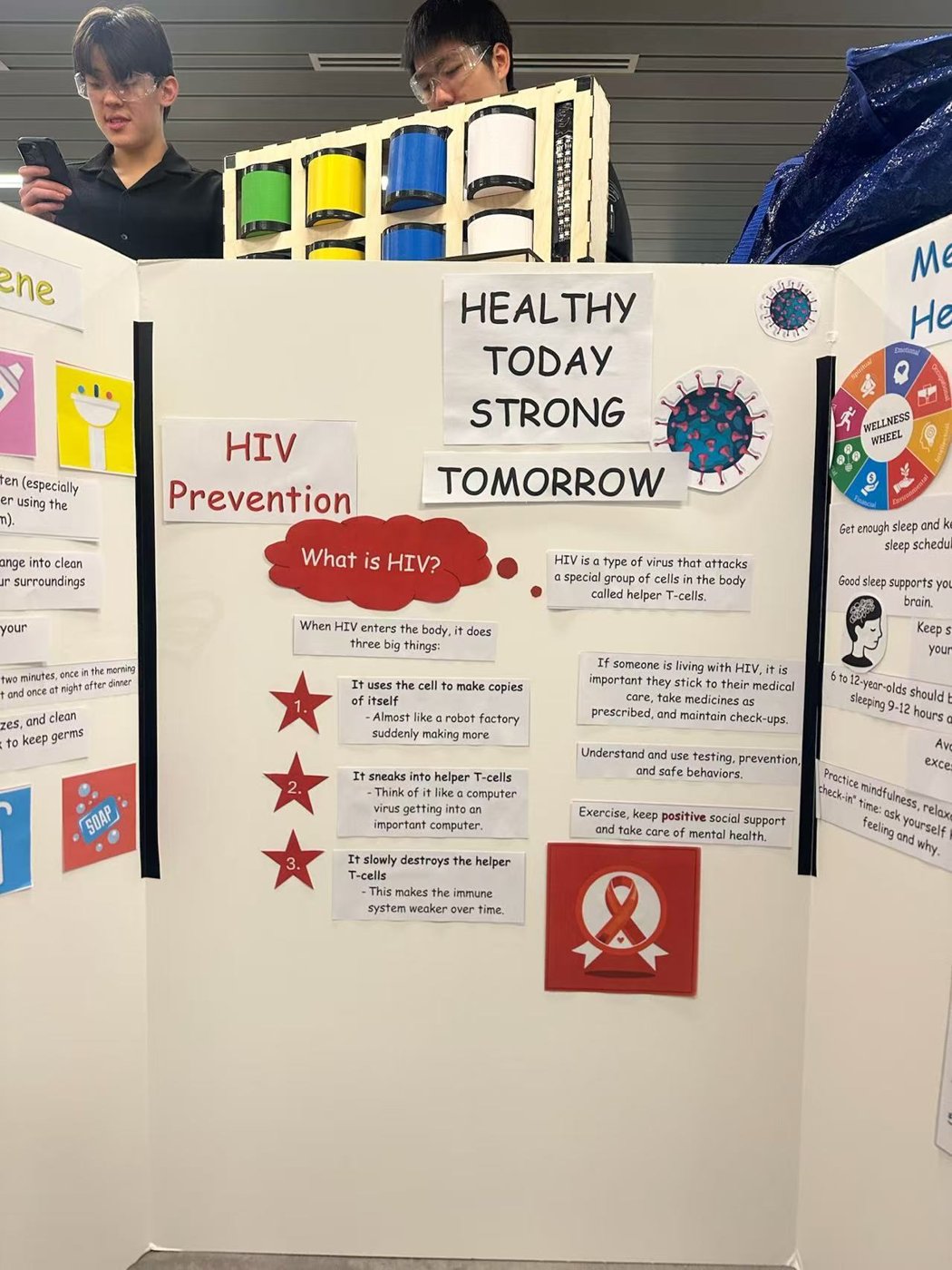
In October 2025 our four-person team (“Green Eggs and West Ham”) was tasked, under a simulated United Nations brief, with designing a traveling museum exhibit to teach children about Good Health and Well-being (UN SDG 3). The exhibit had to work in low-resource settings — no reliable electricity, internet, or trained staff — while staying engaging, durable, portable, and culturally adaptable.2025 年 10 月,我们四人团队(“Green Eggs and West Ham”)在一个模拟的联合国任务背景下,受命设计一个可巡回展出的博物馆展品,向儿童(7–11 岁)普及“良好健康与福祉”(联合国可持续发展目标 SDG 3)。展品必须能在资源匮乏的环境中运行——没有稳定的电力、网络或专业人员——同时保持趣味性、耐用、便携且具有文化适应性。
The Solution解决方案
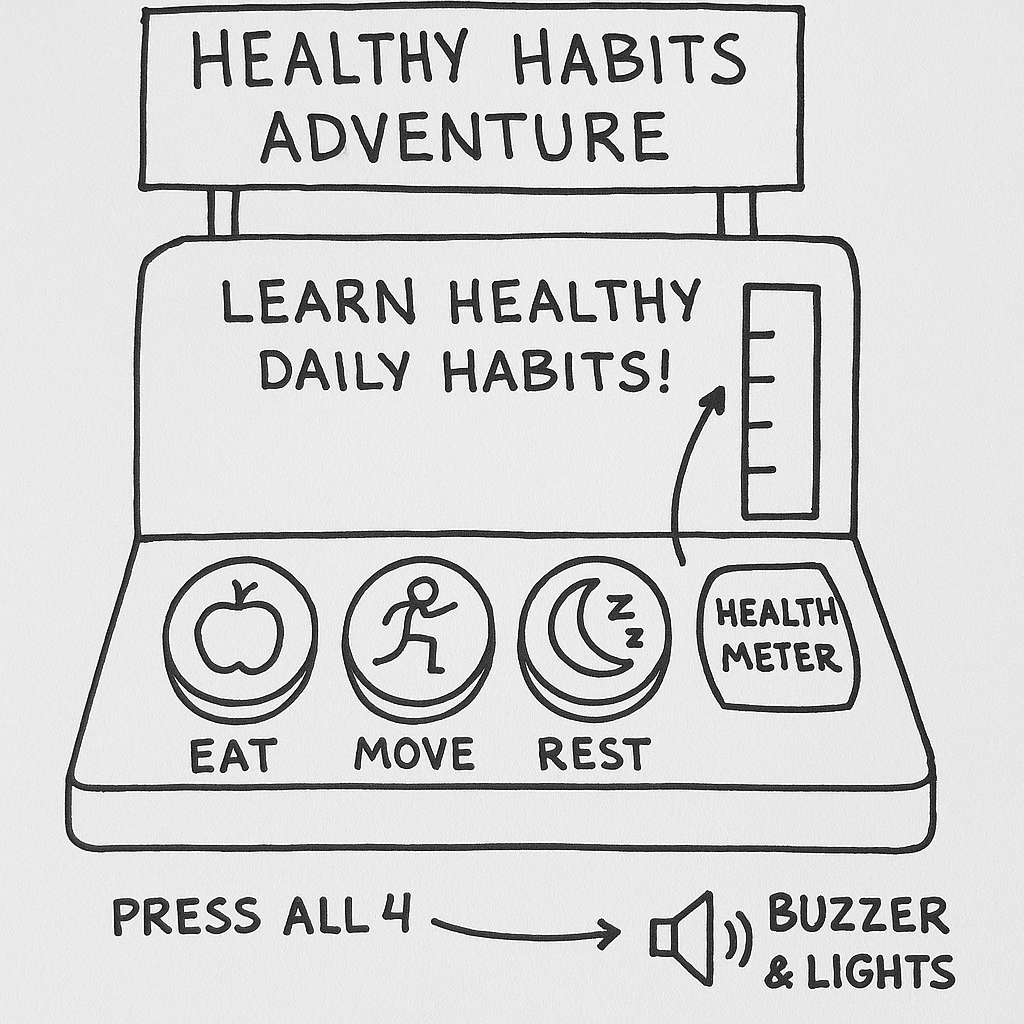
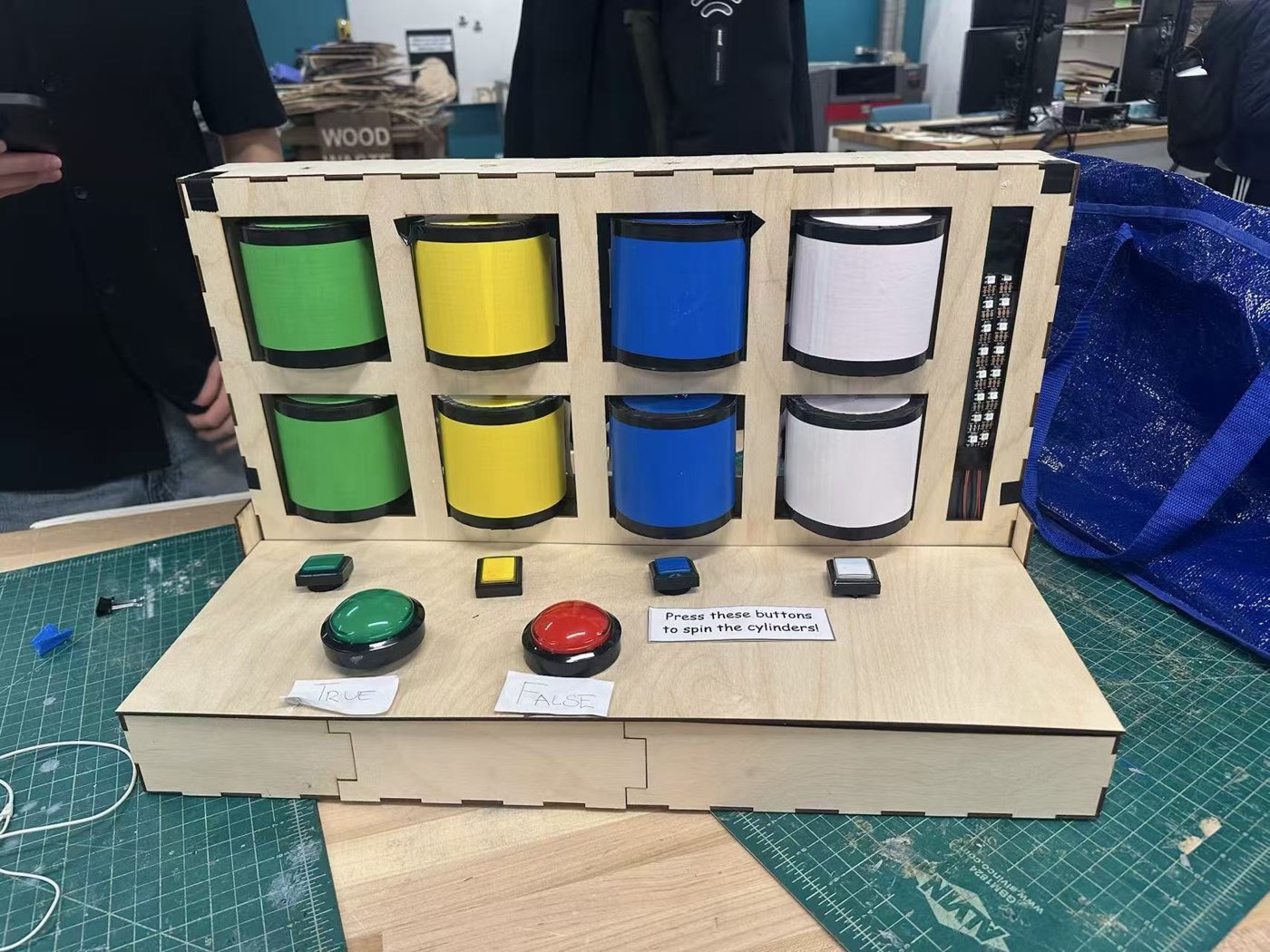
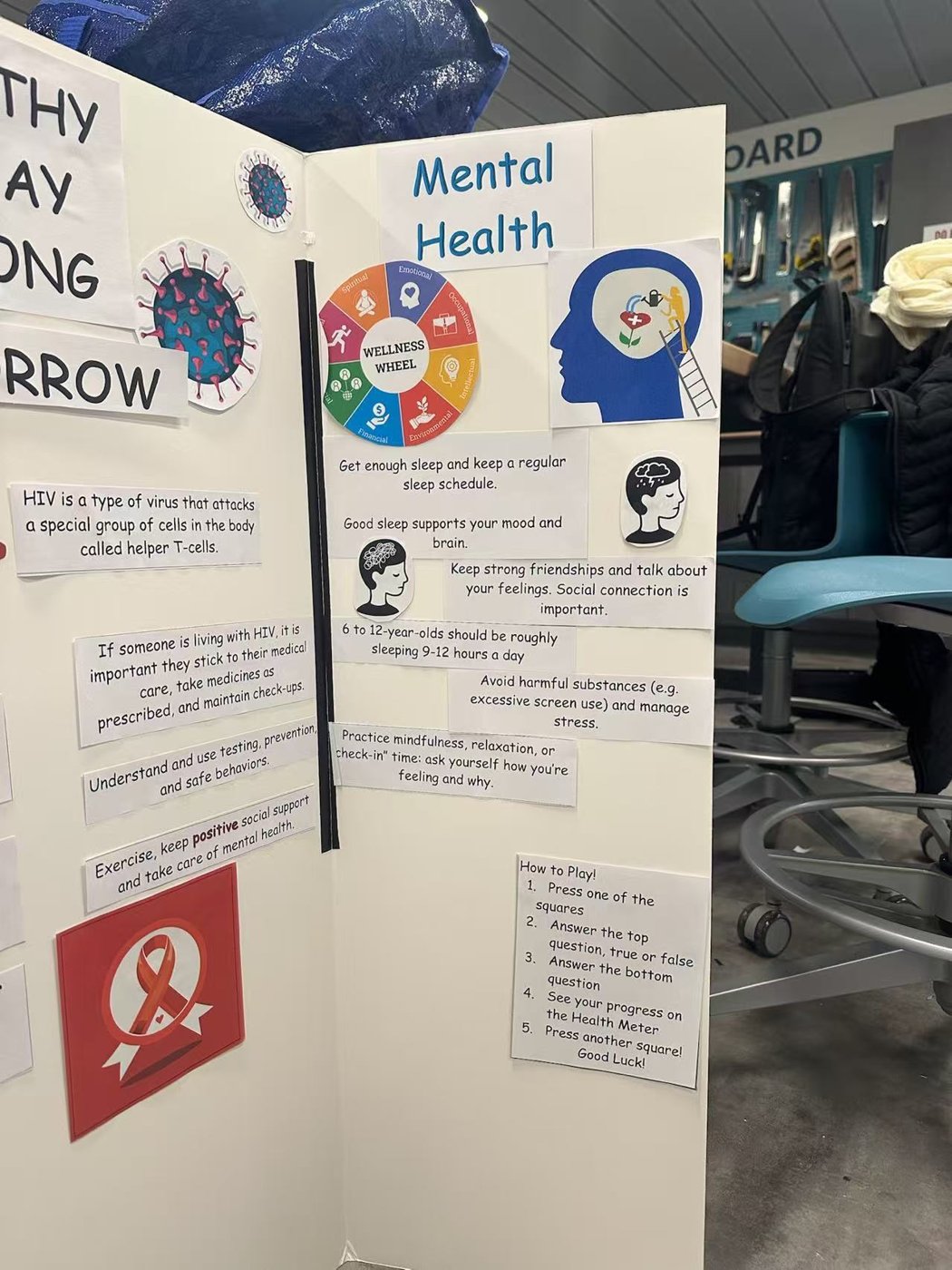
We built the “Healthy Habit Adventure”: a laser-cut wooden console that turns a health quiz into a hands-on game. Players pick one of four health categories (hygiene, mental health, HIV prevention, healthy living), a 3D-printed cylinder rotates to reveal a question, and they answer with large green “True” / red “False” arcade buttons. A NeoPixel LED “Health Meter” lights green or red for each answer and runs a rainbow celebration once every category is complete.我们打造了“健康习惯大冒险”:一个激光切割木质操作台,把健康知识问答变成动手游戏。玩家从四个健康主题(卫生、心理健康、艾滋病预防、健康生活)中选择一个,一个 3D 打印的圆柱体随即转动并显示问题,玩家用绿色“正确”/红色“错误”的大号街机按钮作答。前方的 NeoPixel LED“健康仪表”会针对每次作答亮起绿灯或红灯,并在完成全部主题后播放彩虹庆祝动画。
How It Works工作原理
The electronics are driven by a single Raspberry Pi Pico programmed in MicroPython as a state machine:全部电子部分由一块 Raspberry Pi Pico 以 MicroPython 编写的状态机驱动:
- Four 180° positional micro-servos on PWM pins rotate the 3D-printed cylinders to reveal and hide questions.四个 180° 定位舵机通过 PWM 引脚转动 3D 打印圆柱体,以显示或隐藏问题。
- Six arcade buttons (four category selectors + True/False) use the Pico’s internal pull-down resistors and software debouncing for stable input.六个街机按钮(四个主题选择键 + 正确/错误键)使用 Pico 内部下拉电阻并配合软件去抖,确保输入稳定。
- An 8-LED NeoPixel strip acts as the “Health Meter,” giving instant green/red feedback and a rainbow victory animation.8 颗 NeoPixel LED 灯带充当“健康仪表”,即时给出绿/红反馈,并在通关时播放彩虹动画。
- Answers are checked against an in-code answer table; completed columns are locked out, and a battery pack makes the whole exhibit grid-independent and portable.作答与程序内置的答案表比对;已完成的列会被锁定,整套展品由电池组供电,因而不依赖电网、便于携带。
My Role我的职责
I proposed the concept that the team selected — Design #1 scored highest on our weighted decision matrix — and was responsible for the electromechanical integration and physical housing:团队最终选用的方案正是我提出的——在我们的加权决策矩阵中,方案 #1 得分最高——我负责展品的机电集成与外壳结构:
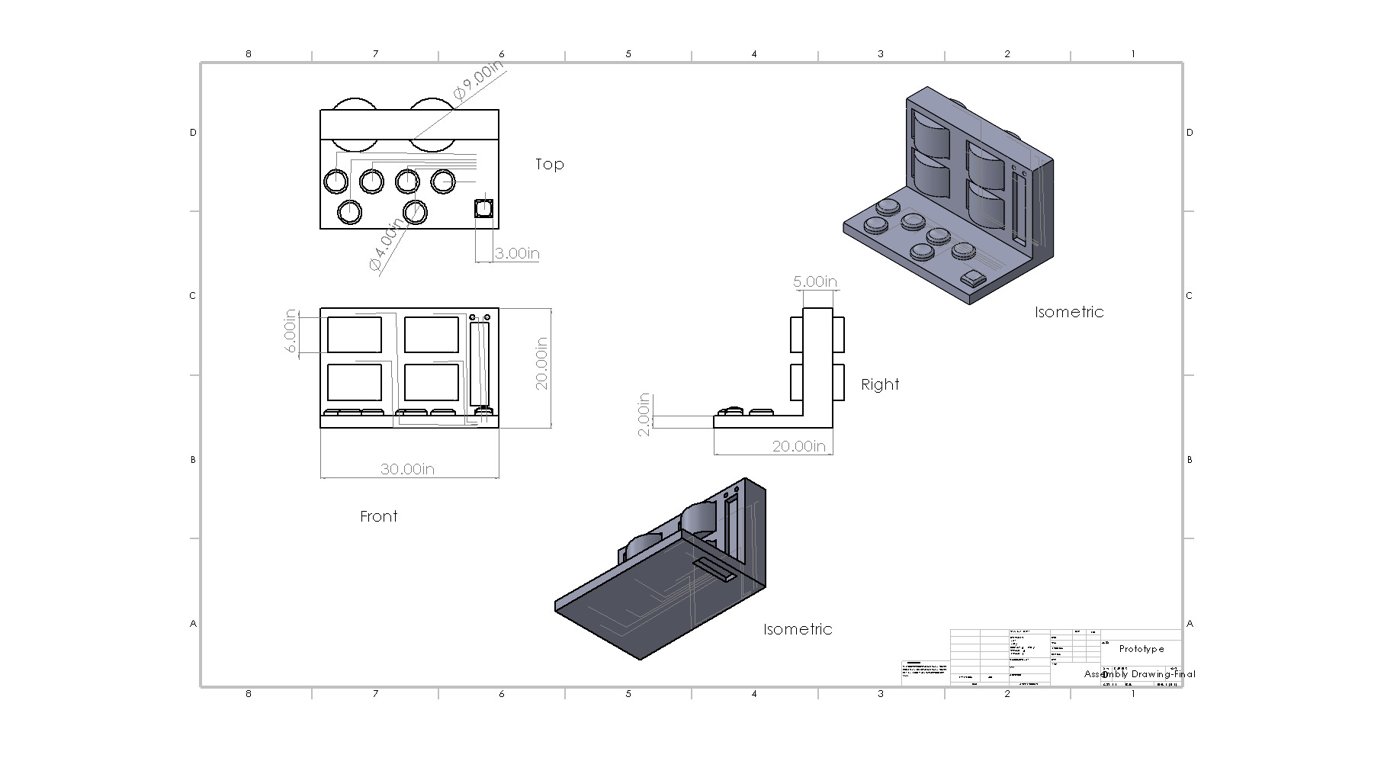
- Modeled an early prototype in SolidWorks — the platform, four spinning cylinders, their assembly, and dimensioned drawings.用 SolidWorks 建模了早期原型——底座、四个旋转圆柱体、装配体以及带尺寸标注的工程图。
- Drew the laser-cut plywood shell in AutoCAD and SolidWorks, with interlocking “teeth” joints for modular assembly, and shortened it to 24" to fit the available wood stock.用 AutoCAD 与 SolidWorks 绘制激光切割胶合板外壳,设计便于模块化拼装的“齿形”榫接,并将长度缩短至 24 英寸以适配现有木料。
- Wired the Raspberry Pi Pico to the four servos and the LED strip across multiple breadboards, planning the circuit so one battery pack could power every actuator.在多块面包板上将 Raspberry Pi Pico 与四个舵机和 LED 灯带连线,并规划电路,使一组电池即可为全部执行器供电。
- Wrote the MicroPython code that runs the game, including the Health Meter scoring logic and the run_rainbow_celebration() victory animation.编写了驱动整个游戏的 MicroPython 代码,包括“健康仪表”计分逻辑与 run_rainbow_celebration() 通关动画。
Results & Reflection成果与反思
User testing at the showcase confirmed the core hypothesis — physical interactivity held children’s attention far better than static displays — and the build came in under budget. Testing also surfaced concrete next steps: clearer on-exhibit instructions, sturdier joints, and more consistent button/servo response. The team navigated a major mid-project hardware pivot when the available 360° servos proved defective, switching to 180° positional servos and redesigning the control logic from continuous spin to a precise 0–180° toggle.展示日的用户测试验证了我们的核心假设——相比静态展示,动手互动更能抓住孩子们的注意力——而且制作成本控制在预算之内。测试也指出了明确的改进方向:更清晰的展品操作说明、更牢固的结构连接,以及更一致的按钮/舵机响应。项目中期,团队还应对了一次重大硬件调整:库存的 360° 舵机存在缺陷,于是改用 180° 定位舵机,并把控制逻辑从持续旋转改写为精确的 0–180° 切换。
Gallery图库
Click any image to enlarge.点击任意图片可放大。